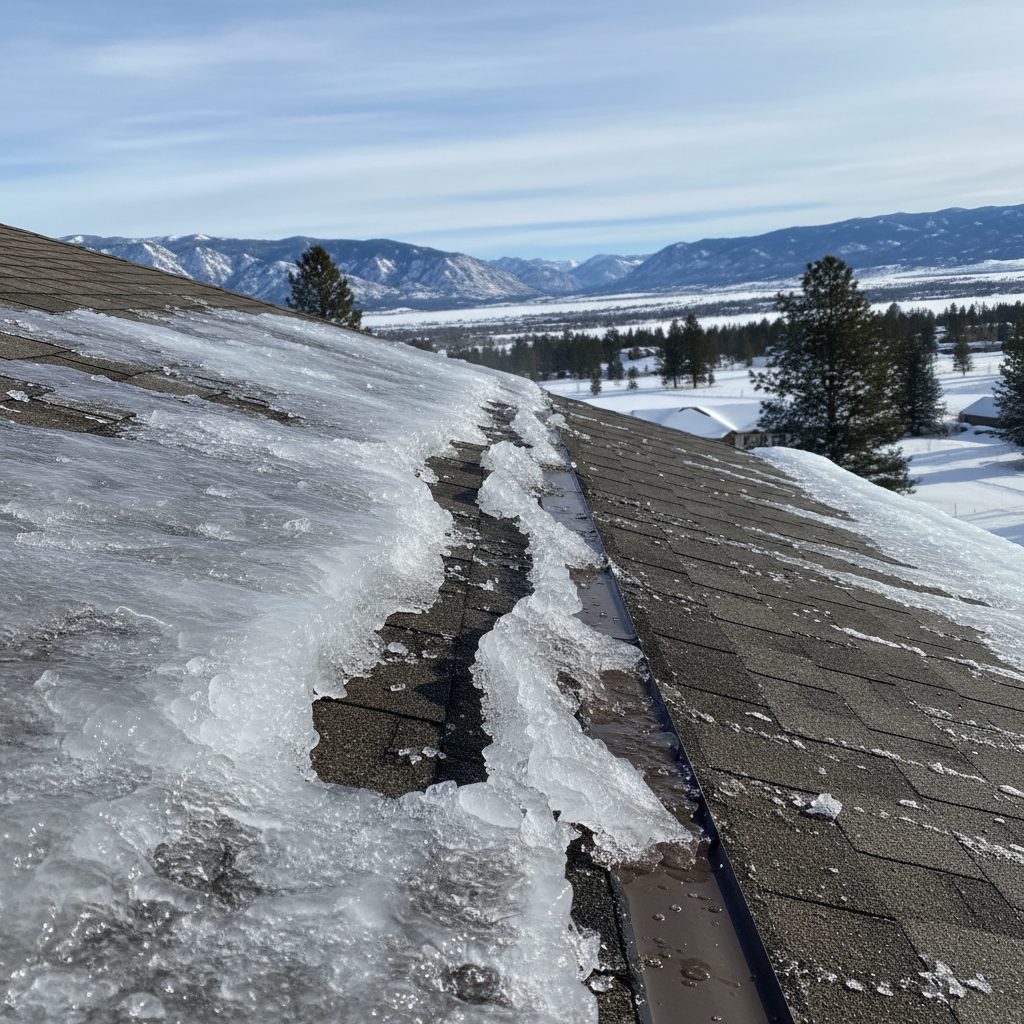
Ice Dams: What They Are & Why They're a Problem
You've seen them, right? Those thick, icy ridges that pile up at the edge of your roof, often with icicles hanging down like frozen teeth. Well, that, my friend, is an ice dam, and it's way more than just a pretty winter decoration. It's a real headache, and it can actually do some serious damage to your home here in Helena.
So, what's actually happening? Basically, heat from your house sneaks into your attic, warming up the roof deck. This melts the snow on the upper part of your roof. That melted water then slides down the roof until it hits the colder eaves — those parts usually aren't as well-insulated or heated from below. It refreezes there, building up that dam. More meltwater comes down, gets stuck behind the dam, and backs up under your shingles. Once it's under your shingles, it can seep into your attic, walls, and ceilings, causing water damage, mold, and rot. Nobody wants that, especially not after a heavy snow year like we sometimes get around here, particularly in neighborhoods like the North Valley where homes can be a bit older and insulation might not be top-notch.
Before You Start: Safety First, Always
Before you even think about tackling an ice dam, you absolutely need to think about safety. We're talking about working on a slippery roof, often in freezing temperatures, with heavy ice. It's just plain dangerous. Don't try to be a hero if you're not comfortable or don't have the right gear. A fall from a ladder or roof can land you in the hospital, and believe me, that's way worse than a leaky ceiling.
If you're going to try some DIY, make sure you've got:
- A sturdy ladder, properly secured.
- Non-slip footwear.
- A spotter, if possible.
- Warm, layered clothing.
- And a healthy dose of common sense, obviously.
DIY Ice Dam Removal: What You Can Try
Okay, so you've looked at the situation and you feel confident enough to give it a shot. Here are a couple of things you can realistically do yourself:
1. The Pantyhose/Calcium Chloride Method
This is a pretty common trick. You grab some calcium chloride (and please, NOT rock salt, which can damage your roof and plants), fill a pair of old pantyhose or a sock with it, and lay it across the ice dam. The calcium chloride will slowly melt a channel through the ice, letting the trapped water drain off your roof. It's slow, sure, but it works for smaller dams and doesn't involve hacking at your roof.
2. Gentle Snow Removal
If there's a fresh layer of snow on your roof making the problem worse, you can try to remove it carefully. A roof rake with a long handle lets you pull snow off the roof while you stand safely on the ground. Just don't try to chip away at the ice dam itself with a roof rake – you'll only damage your shingles. The idea here is to remove the fuel for the ice dam, not to break the dam itself.
When to Call a Pro (Seriously, Call Us)
There are definitely times when doing it yourself just isn't the answer. Here's when you should put down the roof rake and pick up the phone:
- The Dam is Huge: If you've got a massive ice dam, several inches thick and stretching across a big chunk of your roof edge, it's just too big for the pantyhose trick.
- You See Water Inside: If water is already leaking into your home, you need a fast, effective solution. Pros have specialized equipment for this.
- It's Too High or Too Steep: If your roof is high, steep, or tough to get to safely, don't risk it.
- You're Not Comfortable: If you have any doubts about whether you can do it safely or effectively, don't push it.
- Repeated Problems: If you're getting ice dams every single year, you probably have an insulation or ventilation problem that needs a professional assessment, not just a temporary fix.
When you call us, Helena Snow Plow & Removal, we typically use steam to remove ice dams. Steam is great because it melts the ice without damaging your shingles or gutters. It's quick, efficient, and safe for your roof. We've got the right equipment, the training, and the insurance to get the job done right and keep everyone safe.
After the Ice Dam is Gone: Prevent Future Problems
Once the ice dam is gone, whether you did it or a pro did, you need to start thinking about prevention. The main reason these happen is usually heat loss from your attic and poor ventilation at the eaves. Here's what you should look into:
- Improve Attic Insulation: Make sure your attic has enough insulation to keep heat from sneaking into the attic space.
- Check Attic Ventilation: Good ventilation, usually with soffit and ridge vents, lets cold air come in at the eaves and warm air leave at the ridge. This keeps the attic temperature closer to the outside temperature.
- Seal Air Leaks: Find and seal any gaps or cracks in your attic floor that let warm air from your living space rise into the attic. Think about areas around light fixtures, plumbing stacks, and attic hatches.
Taking these steps will really help prevent those annoying ice dams from forming again next winter. Stay safe out there, Helena!